The Grande Braderie de Lille: what sets it apart from the neighbourhood braderies
Boulevard de la Liberté for the antique dealers, the Gare Saint-Sauveur for the children, whole districts for the residents: the Grande Braderie is not just another flea market. Its origins go back to 1127, but the word that names it has two competing birth dates, and its real figures remain vague.
The Grande Braderie de Lille is not a local car boot sale scaled up. It is an event run by the City, with its own sectors, its own registration calendar and a history it traces back nine centuries.
This page sets out what makes the Grande Braderie unique compared with the dozens of neighbourhood braderies held in Lille every year, traces its origins, and points to the figures that even the City does not publish.
What sets the Grande Braderie apart from the neighbourhood braderies?
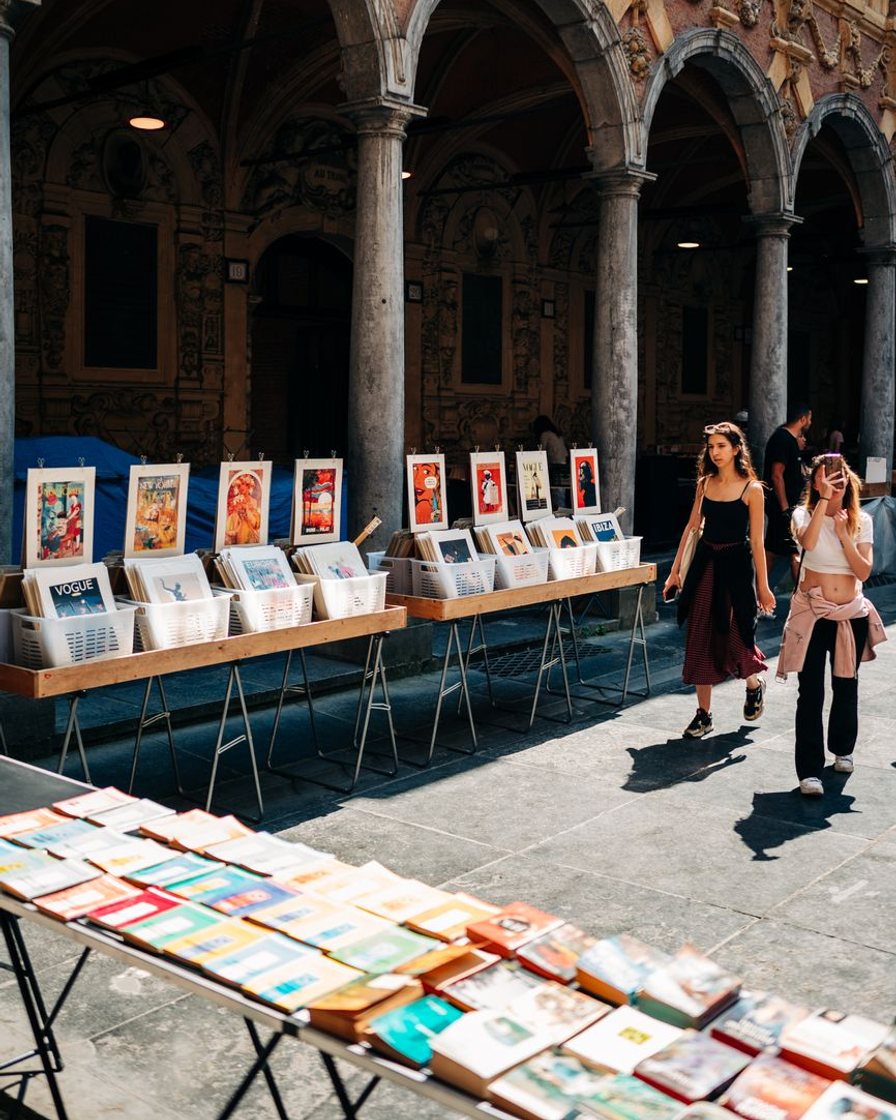
Every year Lille holds dozens of small neighbourhood braderies, such as the one in Saint-Maurice Pellevoisin. They cover a few streets, last one day, and sellers pay by the metre, €4 per metre in 2026.
The Grande Braderie, on the other hand, covers Vieux-Lille, the centre and Wazemmes with 53 km of stalls and runs for 34 hours without a break. It is the scale, not the kind of stalls, that makes the difference.
Both share the same principle: free access to the streets, direct sales at the stalls, and free pitches for residents of Lille, Hellemmes and Lomme. Attendance figures are detailed in our page on the Braderie de Lille.
Where does the Braderie de Lille come from?
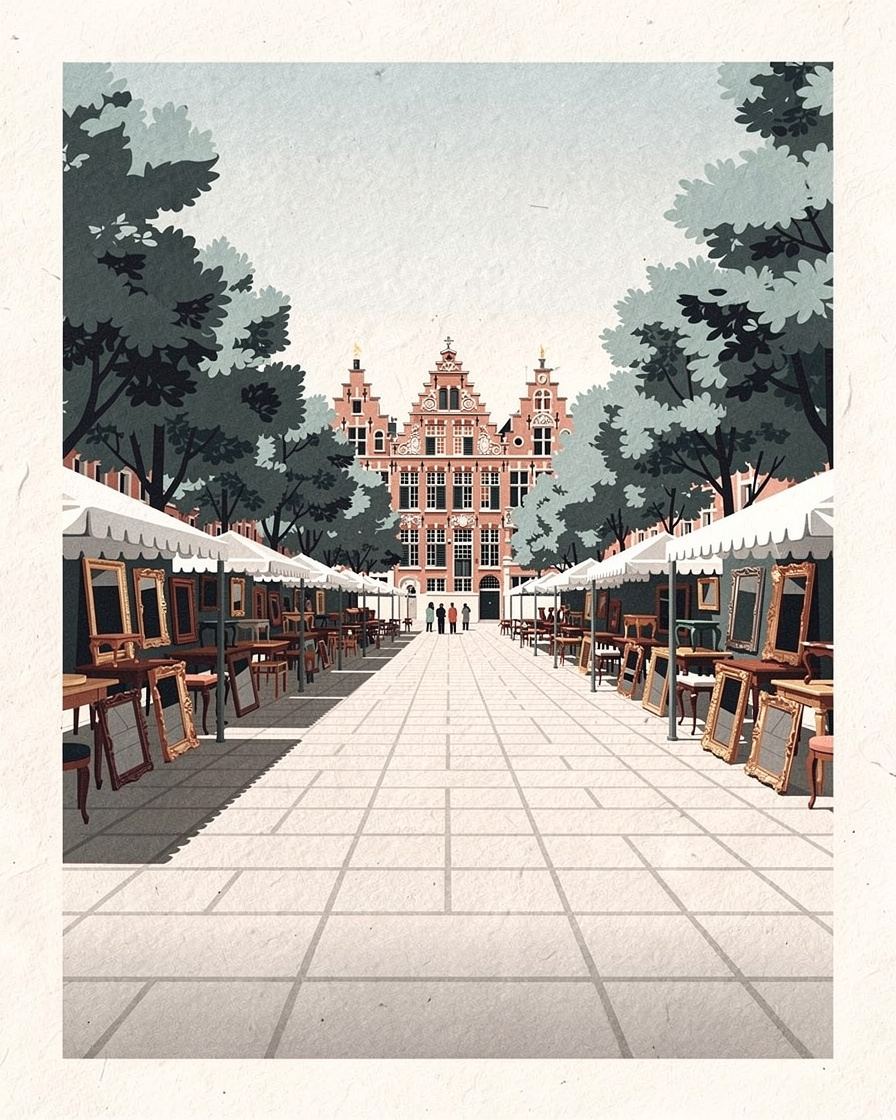
The first written record dates from 1127, in the chronicles of Galbert of Bruges: a "franche foire", a free fair allowing foreign merchants to sell in Lille without paying taxes, a few days after the Assumption in mid-August.
According to the City of Lille, the word "braderie" appeared later, in the 15th century, from the Flemish braden or braaden (to roast), in reference to the merchants who sold poultry and grilled herring in the streets.
Servants of wealthy households then won the right to sell their masters' old belongings alongside the roasters: that mix is what produced today's giant flea market.
Is the word "braderie" really 500 years old?
The sources do not fully agree. The City of Lille, France 3 and several local historians date the word to the 15th century, in texts that still speak of a "franche foire".
Another version, popularised by the historian Lorànt Deutsch in 2013, dates "the braderie" back to 1523. The two versions do not cite the same type of document, and we do not choose between them.
What is not in dispute: the fair itself is documented from 1127, and the event today presents itself as nine centuries old, whatever the exact date its current name took hold.
When is the next Grande Braderie?
The City of Lille has set the next edition for Saturday 4 and Sunday 5 September 2027. The opening hours are not yet published; the usual format is from 8am on Saturday to 6pm on Sunday, or 34 hours without a break.
That format has had only one exception since 2022: in 2024, the Braderie was pushed back two weeks, to Saturday 14 and Sunday 15 September 2024, so that the security forces deployed for the Paris Games could be freed up. The details of each edition are in our page on the Braderie dates.
The 2027 date is already known: this is when a room in the centre can still be booked at the normal rate, with free cancellation. Braderie rates, once set, never come back down.
See places to stay in Lille for the Grande Braderie weekend 2027 →Partner link: booking through it supports the site at no extra cost to you.How many zones and types of stallholder does the event have?
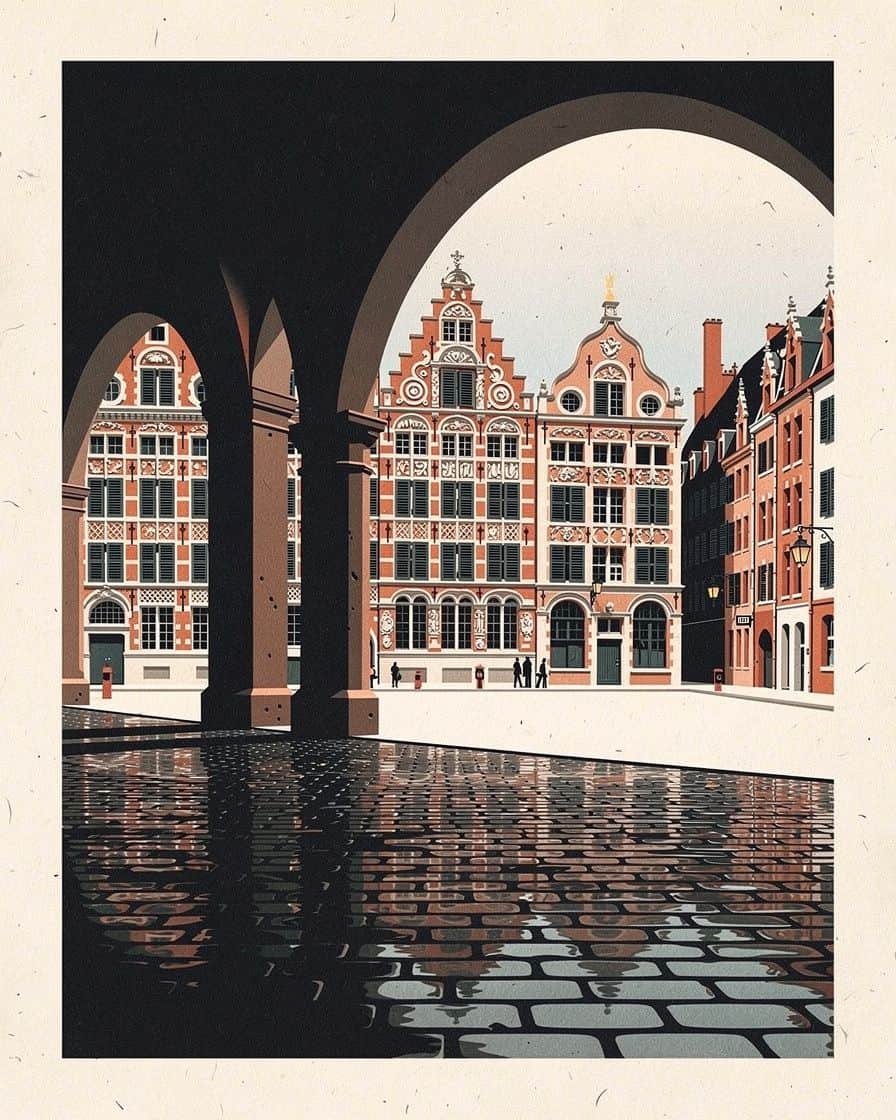
Three groups share the streets. Professional second-hand and antique dealers gather on boulevard de la Liberté and the Esplanade. Shopkeepers set out their goods in front of their windows in the centre. Residents take over Vieux-Lille and Wazemmes.
In 2026 the City counted 5,425 stallholders in total: 2,769 residents' stalls, 1,877 shops and 514 second-hand and antique dealers. This breakdown can be read on our page on the Braderie map.
A children's braderie runs alongside, at the Gare Saint-Sauveur: in 2026, on Saturday 5 September from 8am to 7pm. Children from Lille, Hellemmes and Lomme sell toys and books there, on stalls separate from the rest of the event.
What do stallholders actually pay?
A stall is free for residents of Lille, Hellemmes and Lomme and for Lille shopkeepers: an exception in France, where most flea markets charge by the linear metre.
Traders from elsewhere and food stalls paid €267 in 2026, payable by 30 June. By comparison, a neighbourhood braderie such as Saint-Maurice Pellevoisin charged €4 per metre the same year.
A detailed scale of charges by type of stall at the Grande Braderie is not published in any of the sources we consulted.
Sunday morning is the time for sightseeing: the centre is still calm, and a guided tour of Vieux-Lille can be booked online, with free cancellation in most cases. Braderie weekend slots go first.
See the tours and activities available in Lille →Partner link: booking through it supports the site at no extra cost to you.Which figures does the City never publish?
The first gap is economic: no source puts a figure on what the event brings the City, nor on spending by sector. An old calculation puts purchases over the weekend at more than 37 million euros, but that is a multiplication, not a till count.
The second is historical: the number of stallholders before 2024 is not published on any page we consulted, only phrases such as "thousands of sellers". It is impossible to draw a trend over ten or twenty years.
The third is human: attendance, estimated at 2 to 2.5 million people, remains an extrapolation. No sensor count is published, for the Grande Braderie or for the neighbourhood braderies. The districts concerned are shown on our map of Lille.
Booking early is the only reliable lever: a cancellable room booked as soon as the dates are announced is paid at the rate of an ordinary week, before demand pushes prices up.
See places to stay in central Lille for the 2027 Grande Braderie →Partner link: booking through it supports the site at no extra cost to you.Sources
lille.fr: history of the Braderie, who invented the Braderie de Lille, 2024 Braderie review (15 September 2024), 2026 review in figures, the braderies of Lille in 2026. Wikipedia (Braderie de Lille, updated 2026). France 3 Hauts-de-France (2023 and 2024 Braderie, the franche foire).
Evasion Le Nord (the Braderie de Lille, nine centuries young), Metropolys, RTL (Lorànt Deutsch, general knowledge), L'Union (30 August 2022), archives.lille.fr, Festivalenfrance (2026), JDS (26 August 2026). Research consolidated on 12 September 2026.
Frequently asked questions
What is the difference between the Grande Braderie and a neighbourhood braderie in Lille?
How old is the Braderie de Lille?
When is the next Grande Braderie de Lille?
How much does a stall at the Grande Braderie de Lille cost?
Does the City publish the total number of Braderie visitors?
Élise Vandamme
Born in Roubaix, Élise has covered the braderie for eleven editions, from the setting up of the stalls to the clearing of the mussel shells on Sunday evening. She knows the streets where you can still get through at 3pm and the ones you should no longer head into. Her rule: never recommend a time slot she has not tested herself.